

What is Artisanal Jewelry? Understanding Its Beauty and Craft
Artisanal jewelry is more than a trend. It is the story of human creativity pressed into metal, stone, and time. Most people expect handmade pieces to be a small part of the market, but demand for individuality is rising so quickly that the global handmade jewelry market is projected to reach $39.7 billion by 2026. Mass production rules fast fashion, but these one-of-a-kind creations are quietly reshaping what luxury really means.
Table of Contents
- Defining Artisanal Jewelry: Characteristics And Origins
- The Importance Of Handmade Craftsmanship In Artisanal Jewelry
- Exploring Materials And Techniques In Artisanal Jewelry Making
- Artisanal Jewelry In The Fashion World: Trends And Influence
Quick Summary
| Takeaway | Explanation |
|---|---|
| Artisanal jewelry tells unique stories | Each piece reflects individual artistic vision, cultural heritage, and personal narrative, making it a form of wearable art. |
| Handmade craftsmanship ensures quality | Artisans create jewelry with precision and care, offering unique characteristics that mass production cannot replicate. |
| Sustainability is key in artisanal jewelry | Many artisans use ethically sourced or recycled materials, promoting responsible consumption and environmental consciousness. |
| Personalization enhances customer connection | Unique, one-of-a-kind pieces provide consumers with a chance to express their individuality and style through their jewelry. |
| Support local artisans and communities | Choosing handmade jewelry contributes to local economies and helps preserve traditional crafting techniques for future generations. |
Defining Artisanal Jewelry: Characteristics and Origins
Artisanal jewelry represents a profound connection between human creativity and craftsmanship, transcending mere decorative accessories to become wearable art forms that tell unique stories. Unlike mass-produced jewelry, artisanal pieces are meticulously crafted by skilled artisans who invest significant time, expertise, and personal expression into each creation.
The Cultural Significance of Handmade Jewelry
According to UNESCO, artisanal products are distinguished by their direct manual contribution, where the artisan’s skill remains the most substantial component of the finished work. In jewelry making, this translates to pieces that reflect deep cultural narratives and individual artistic vision.
Key characteristics of artisanal jewelry include:
- Unique Design: Each piece is individually created, ensuring no two items are exactly alike
- Personal Craftsmanship: Handmade with traditional techniques passed through generations
- Intentional Materials: Often utilizing locally sourced or sustainable materials
Historical Roots and Modern Evolution
The tradition of artisanal jewelry stretches back thousands of years, with ancient civilizations using natural materials like shells, stones, and metals to create personal adornments. Modern artisanal jewelry continues this rich legacy while incorporating contemporary design principles and innovative techniques.
For those interested in exploring more about the intricacies of handmade design, our guide on artisan jewelry features provides deeper insights into this fascinating craft.
Today’s artisanal jewelry makers blend traditional skills with modern aesthetics, creating pieces that are not just accessories but statements of individual style, cultural heritage, and personal narrative. Each handcrafted piece represents a commitment to preserving artistic traditions while simultaneously pushing creative boundaries.
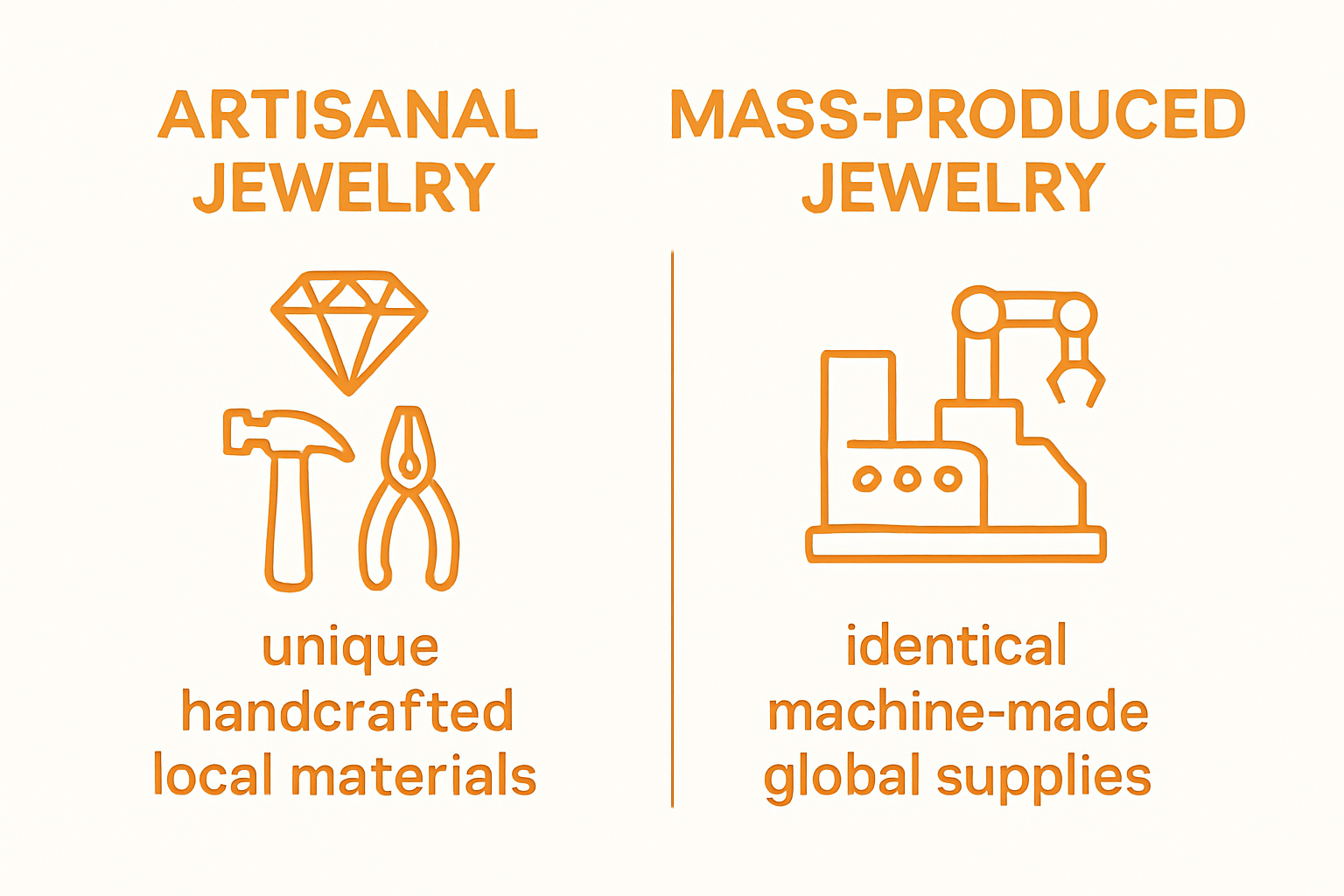
Below is a table comparing key differences between artisanal (handmade) jewelry and mass-produced jewelry, highlighting distinct features discussed in the article.
| Aspect | Artisanal Jewelry | Mass-Produced Jewelry |
|---|---|---|
| Creation Process | Crafted by skilled artisans using traditional or innovative techniques | Produced in factories by machines using standardized methods |
| Uniqueness | Each piece is one-of-a-kind, with variations | Each piece is identical and standardized |
| Materials | Often locally sourced, recycled, or ethically chosen | Typically chosen for cost-effectiveness and scalability |
| Artisan Involvement | High personal investment and craftsmanship | Minimal personal involvement; automated production |
| Impact & Value | Supports local artisans, preserves culture, offers personalization | Focuses on efficiency, scalability, and lower costs |
| Environmental Consideration | Emphasizes sustainability and responsible sourcing | Often less focus on environmental impact |
The Importance of Handmade Craftsmanship in Artisanal Jewelry
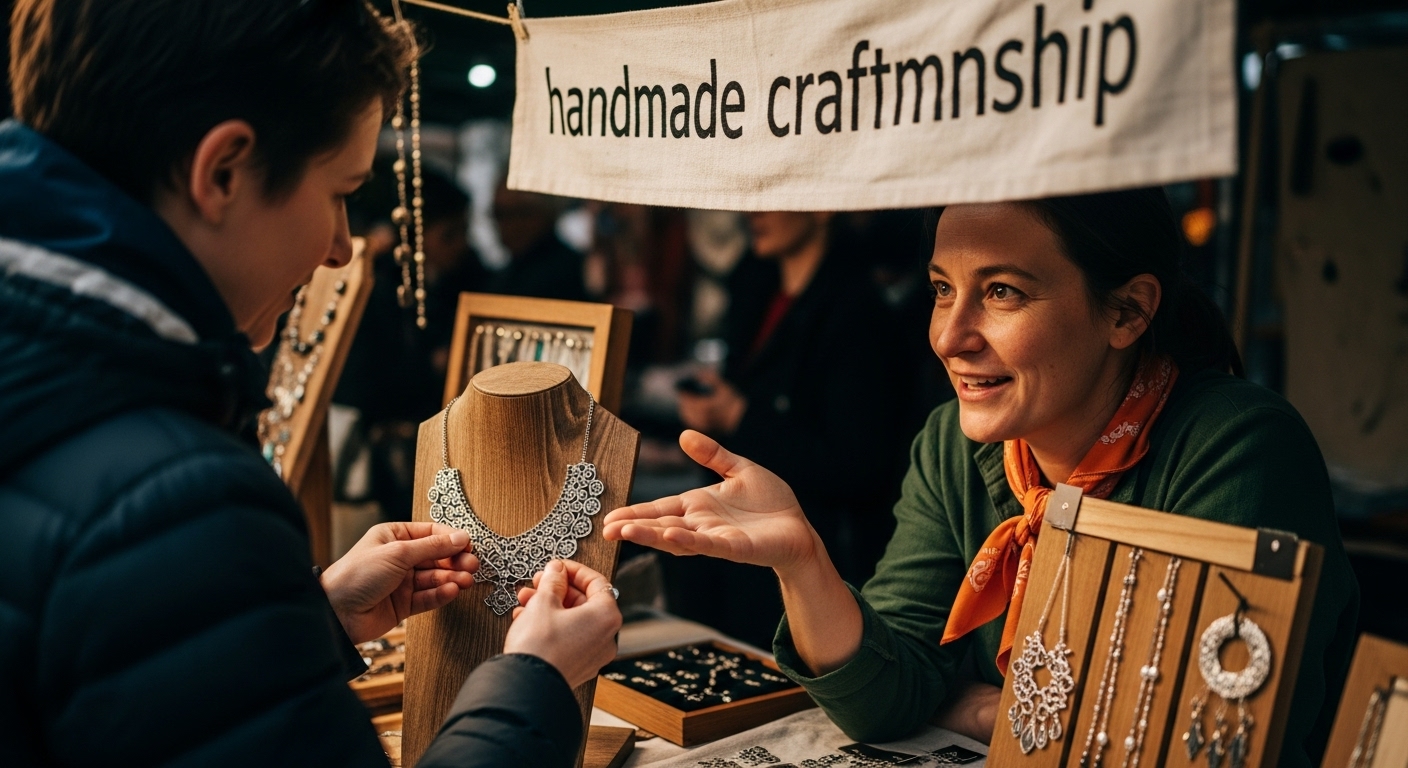
Handmade craftsmanship represents the soul of artisanal jewelry, transforming raw materials into extraordinary wearable art that tells a profound story. Unlike mass-produced accessories, handcrafted jewelry embodies a deep connection between the artisan and the final creation, representing more than simple ornamentation but a celebration of human creativity and skill.
The Human Touch in Jewelry Making
According to the Brooklyn Museum, handmade craftsmanship underscores the value of personal skill, creativity, and tradition. The artisan’s hands become the primary tool, infusing each piece with unique characteristics that machine production cannot replicate.
Critical aspects of handmade craftsmanship in jewelry include:
- Personal Investment: Each piece represents hours of dedicated skill and emotional connection
- Precision and Detail: Intricate techniques that require years of training and practice
- Intentional Imperfections: Subtle variations that make each piece truly one-of-a-kind
Economic and Cultural Significance
Handmade craftsmanship in jewelry extends beyond aesthetic appeal. It preserves traditional techniques, supports local artisan communities, and creates economic opportunities for skilled craftspeople. Explore our insights on artisan gold jewelry design to understand the deeper dimensions of this craft.
By choosing handmade artisanal jewelry, consumers participate in a global movement that values human creativity, supports sustainable practices, and celebrates cultural heritage. Each handcrafted piece becomes a testament to the enduring power of human skill and artistic expression.
Exploring Materials and Techniques in Artisanal Jewelry Making
Artisanal jewelry making is a nuanced craft that transforms raw materials into extraordinary wearable art through sophisticated techniques and profound artistic vision. Each piece emerges from a delicate dance between traditional skills and innovative approaches, representing far more than simple decoration.
Traditional Materials and Their Significance
According to research exploring traditional ornament-making methods, artisanal jewelry materials are carefully selected to represent cultural narratives and personal expressions. These materials range from precious metals like gold and silver to more unconventional elements such as recycled materials, natural stones, and locally sourced components.
Key materials in artisanal jewelry include:
- Precious Metals: Gold, silver, copper, and platinum
- Natural Stones: Locally sourced gemstones, crystals, and minerals
- Sustainable Elements: Recycled metals, ethically sourced materials
Advanced Crafting Techniques
Crafting techniques in artisanal jewelry represent generations of accumulated knowledge and skill. Artisans employ methods that require exceptional precision, including intricate metalworking, delicate stone setting, and specialized surface treatments. Learn more about designing unique jewelry techniques to understand the depth of this craft.
These techniques transform raw materials into intricate designs that tell stories, preserve cultural heritage, and showcase the extraordinary potential of human creativity.
The table below summarizes the main materials and crafting techniques used in artisanal jewelry making, as outlined in the article.
| Category | Examples | Significance |
|---|---|---|
| Precious Metals | Gold, silver, copper, platinum | Valued for durability and cultural meaning |
| Natural Stones | Local gemstones, crystals, minerals | Emphasize authenticity, reflect regional traditions |
| Sustainable Elements | Recycled metals, ethically sourced materials | Promote environmental responsibility and support conscious consumption |
| Traditional Techniques | Hammering, casting, metalworking | Showcase passed-down knowledge and artisan expertise |
| Modern Techniques | Laser cutting, 3D printing | Blend innovation with tradition for new design possibilities |
From traditional hammering and casting to modern laser cutting and 3D printing, artisanal jewelry makers continually push the boundaries of what is possible in metalwork and design.
Artisanal Jewelry in the Fashion World: Trends and Influence
Artisanal jewelry has transcended traditional boundaries, emerging as a powerful statement of personal style, cultural expression, and ethical consumption in the contemporary fashion landscape. Far beyond mere accessories, these handcrafted pieces represent a profound shift in how consumers perceive and engage with fashion.
The Rise of Conscious Consumption
According to The Conversation, the global fashion market has witnessed a significant transformation driven by consumers seeking authenticity, craftsmanship, and meaningful connections with their accessories. Artisanal jewelry embodies this movement, offering alternatives to mass-produced, impersonal fashion items.
Key trends in artisanal jewelry fashion include:
- Personalization: Unique pieces that reflect individual stories and aesthetic preferences
- Sustainability: Emphasis on ethically sourced materials and responsible production
- Cultural Narratives: Jewelry that communicates heritage and personal identity
Design and Aesthetic Evolution
The contemporary fashion world increasingly recognizes artisanal jewelry as a sophisticated art form. Explore the intricate role of design in jewelry creation to understand how these pieces challenge traditional fashion paradigms.
These handcrafted pieces are not just accessories but powerful statements of creativity, challenging mass production by offering consumers a direct connection to the artisan’s vision and skill. As fashion continues to evolve, artisanal jewelry stands at the intersection of art, personal expression, and cultural dialogue.
Experience the Unmatched Beauty of True Artisanal Jewelry
Are you searching for handcrafted jewelry that captures your individuality and celebrates traditional craftsmanship? The article discusses how mass-produced accessories lack the soul and story of genuine artisanal pieces. It explores the desire for unique designs, personal craftsmanship, and the emotion that comes with owning jewelry that is truly one-of-a-kind.
Discover our featured artisanal designs and see how every piece at Jared Daniel Designs is made by hand, according to your wishes.

Upgrade your collection with jewelry that is dramatic yet perfect for everyday wear. If you have been inspired by what it means to own something unique, now is the time to make it personal. Start exploring our range or get your own custom creation at Jared Daniel Designs. Experience the difference only true craftsmanship can make. For more inspiration, check out Robbie’s Corner and join a movement that values creativity and authenticity.
Frequently Asked Questions
What is artisanal jewelry?
Artisanal jewelry refers to handcrafted pieces created by skilled artisans, emphasizing creativity, craftsmanship, and unique design. Each piece reflects the artisan’s personal style and cultural narratives.
What are the key characteristics of artisanal jewelry?
Artisanal jewelry is known for its unique designs, personal craftsmanship, and intentional use of materials. Each item is one-of-a-kind, often made with locally sourced or sustainable materials and traditional techniques.
Why is handmade craftsmanship important in artisanal jewelry?
Handmade craftsmanship infuses each piece with personal investment, precision, and intentional imperfections, showcasing the artisan’s skill and creativity, which cannot be replicated by machine production.
What materials are commonly used in artisanal jewelry making?
Artisanal jewelry often incorporates precious metals like gold and silver, natural stones, recycled materials, and sustainably sourced components that hold cultural significance and personal expression.